Saturday, July 4, 2009


Kids-with-Cameras Project in Santiago Zamora


We have finally begun our "kids-with-cameras" project with the sons and daughters of "Las Estrellas de Santiago Zamora."  Our first day of teaching photography to the kids, although a bit hectic due to the rain, went extremely well.  First practicing with digital cameras, our young photographers learned the basics of framing, lighting, and shooting.  We then distributed the six dispasables and will be developing them this weekend! We can't wait to show them thier pictures next week and continue the project into July.   


Why Kids-With-Cameras?


From a development perspective perhaps it is difficult to see the relevance of the arts in development projects.  If this experience workng with women artisans and thier families has taught me anything, it is that the arts are absolutely relevant and import in development.  Projects that incorporate the arts are especially important in indigenous communities where there has been a severe lack of visibility in media and government.  Instead of being under-represented, or “othered” by mainstream media sources, these projects pave the way for members of the community to self-represent and reduces the misrepresentation of culture and heritage.  In place of the stereotypical depictions of indigenous communities that flood the mainstream media, images that accurateley and honestly depict the experiences of these communities emerge.  


We work with kids because they have a fresh eye and a new perspective in thier communities and of the world.  They also create more intimate and honest images of thier lives--as adults we tend to choose and manipulate our images so that others see the world the way we wish them to see it.   


Lesson Plan


Introductions:   Why we take pictures

Basics: 


FRAMING:  Using paper frames show students how to take time arranging shots.  


FREE SHOOT:  Using digital cameras show kids how to focus and shoot (and that’s all!).  Let them explore using the cameras.


PERSPECTIVE:  Show examples of 1 subject shot 3 different ways.  Ask the kids which one they like best and why.  


ACTIVITY ONE: Have students shoot the following subjects from different distances and angles.  


a.  Person 

b.  Object

c.  Landscape


LIGHING:  Talk about simple lightning conditions and when to take pictures.  


CAMERAS:  Distribute disposable cameras and explain how to use them (and the difference between these and the digitals)  


Although most of the pictures were taken with the disposable cameras, here are a few of the pictures taken with our digitals:


ELIZABETH


CLEMENTINO


Thursday, July 2, 2009

Tune in this Sunday!

The TV show LatiNation will be broadcasting a segment on our project in Guatemala this coming Sunday. They interviewed me last Fall, and have edited that with footage from last summer. The show is being described as "Making the Grade, learn how a New York school lends a helping hand to Mayan weavers in Guatemala."

Click the image below to find out when it's playing in your city!

LN

Sunday, June 28, 2009

Filming in Santiago Zamora

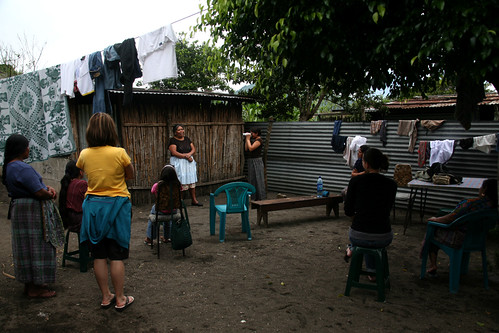
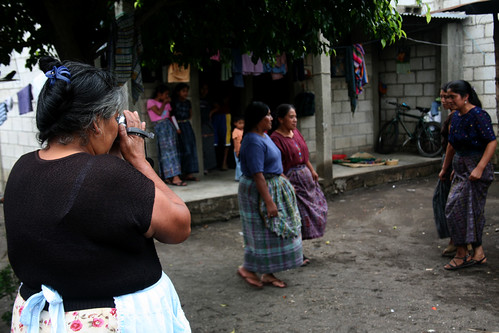
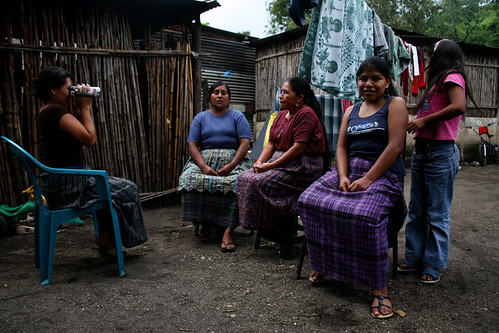
As we push open the corrogated metal gate to Lucia's yard we hear the familiar sounds of life in Santiago Zamora--Emmanuel's tiny feet on the dirt as he giggles and hides behind his mothers corte, the puppies whining from beneath thier overturned basket (which keeps them from chewing on the petate as the women weave), and the chirp of the chickens wandering in and out of our circle of chairs.  As I edit the collection of clips from this past week, I hear the chorus of sounds that we have become accustomed to in Santiago Zamora and am amazed by this beautiful footage shot by the women in the group.  

This video marks the first collaboration in our media project with the "Estrellas de Santiago Zamora", as they have donned themselves.  After our first media workshop, the women requested that we continue filming and create a longer feature showing thier art, thier lives, and their stories.  The week started off with "story-boarding" in which the women brainstormed a theme for the project and images that would show thier lives.  We gave a brief workshop on filming techniques (mainly on framing, lighting, and sound) and had all the women experiment with the cameras.   By Friday we had hours of beautiful footage--the majority filmed by the women themselves.   I can't wait to finish editing and show the women their beautful work.

Glendi, who filmed for the majority of the week:  


Thursday, June 25, 2009

Welcome to the Parsons Collaboration with Ajkem'a Loy'a


Since arriving in San Lucas Toliman, all seven of us (Sandra, Rebecca, Larissa, Alex, Justine, Pascale, and Moira) have been very excited and eager to work with the women. The first day, we had introductions on both sides and sharing of ourselves and our work. we then began with having each woman pick her favorite item that she had made, and explain why she liked it. We all offered comments and constructive criticism while still encouraging each woman's work, which was absolutely beautiful.


After all the women had their turn, it was our turn to share bags and things we had experimented with before coming to San Lucas. The women commented on and critiqued our bags and it was wonderful to hear their opinions and what they liked and see new and different ideas form.


The next day we brought a series of different inspiration images we had collected with different colors, shapes, patterns, and more. By sharing these images, we hoped to show the women some of our design process. The women responded very positively and openly, finding images they enjoyed, laughing at others, and each picked out a few of their favorites. They explained what they liked about the pictures then began to work. It was amazing to see how each woman interpreted the inspiration photos differently, and developed it into their weaving.


As we are continuing, we are working with the women on experimenting with different colors, shapes, patterns, bags, and more. Here are a few photos of the women during the weaving processes.


~Moira

A Beautiful Walk in Santiago


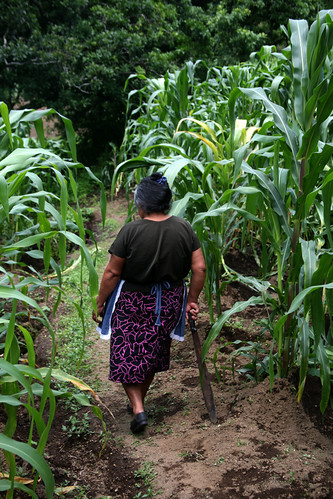
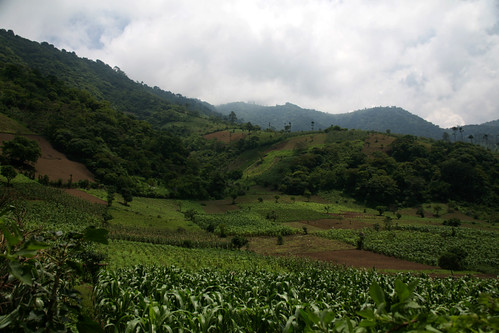
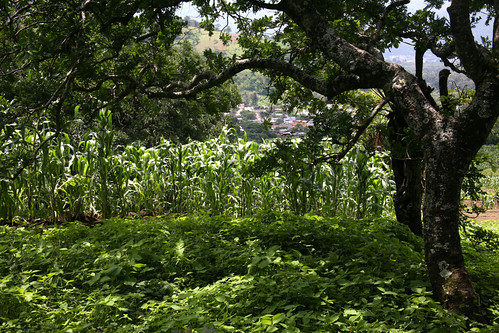
The work in Santiago Zamora continued with the women taking us for a walk up to see Bernarda's plot of land, which her family rents and she works on with her husband and sons. She led the way with her sharp machete through fields and fields of beautiful fertile land on which were planted corn, avocado trees, peanuts, and "jocote" trees.


The walk and our conversations were again documented in video by several of the women who took turns recording with two of our video cameras. After returning to Lucia's home (our usual gathering place) we trained them to charge the camera's battery and to change the video tapes, and we left one camera with them to continue capturing their lives.

It has been a challenge to get the women to really talk about their lives in front of the camera. Most of the stories they have shared on tape are ghost stories, or myths and legends from Santiago and San Antonio. We are hoping that leaving the cameras with them will encourage them to open up a bit and to share what they share with us off camera, for the media project.

Wednesday, June 24, 2009

Video project: Santiago Zamora


We kicked off our work in Santiago Zamora by working with the community to create a video of who they are, what their town is about, and what they want to share about their culture and traditions. This activity has been great in helping strengthen the group (they were not already a group, but were brought together by the municipality to work with us), and in establishing trust between our team of students and faculty and the community (by teaching them video skills as well as showing interest in their stories and everyday lives.) The final piece will be a combination of footage shot by us, by them, as well as photos taken by the kids from a kids with camera workshop that our students are teaching this week.

The women established what they wanted to capture for the documentary. Last Wednesday we videotaped their traditional cooking of pepian and tortilla-making. This past Monday, the focus was dancing,

and a walking tour of their town, and all of the camera work was done by them. This morning we went on a hike with them to chop wood and see their land, and on Friday we will finalize all the video taping with the women demonstrating their artisan crafts: weaving (on the backstrap looom as well as with palm leaves) and doll making.

Stay tuned for the final piece!

Participatory Photography Exhibition in San Lucas Toliman

Last year we conducted a participatory photography project with the women of Ajkem'a Loy'a. Seven compañeras were given disposable cameras in order to capture images representing their hopes and fears. After taking the photographs, the women used the pictures to reflect on their desires and concerns within the context of their collaboration with The New School.

Although we had spent six days a week for a month with Ajkem'a Loy'a, the photography project gave us a deeper understanding of them as individuals and allowed us to take a peep into their intimate worlds.

In collaboration with one of our students, we selected, printed and framed some of the best photographs taken by the women and curated an exhibition. It was such a powerful experience to come back to San Lucas Toliman and be able to welcome the women of Ajkem'a Loy'a with an exhibition of their art.


Sonia's self-portrait representing her fear that her mother would sell her to another house because they couldn't afford her.


Telma's picture of her 89 year old mother weaving, representing her hope to be a strong woman.


Gloria's portrait of a fisherman in Lake Atitlan, representing the customs and traditions of her community.